
Maarten(44)
Leiden → Saint-\u00c9milion (Bordeaux)
For fifteen years I ran a wine bar in Leiden. I imported wines from the Bordeaux region and organized tastings. Every time I visited the vineyards, I felt the same pang: I wanted to be here, not just talk about it. When my lease in Leiden expired and the landlord raised the rent by 40%, it was a sign. I sold my business and bought a small wine estate near Saint-\u00c9milion.
Starting a business in France means choosing from a maze of legal forms. I chose the SARL (Soci\u00e9t\u00e9 \u00e0 Responsabilit\u00e9 Limit\u00e9e) \u2014 comparable to a Ltd/BV. The minimum capital is just \u20ac1, but in practice you want more for credibility. Setting up cost me \u20ac3,000 including legal advice and registration with the RCS (Registre du Commerce et des Soci\u00e9t\u00e9s) through the Chambre de Commerce. You need an expert-comptable \u2014 a mandatory accountant who also acts as your tax advisor.
French business culture is fundamentally different from Dutch culture. In the Netherlands a meeting takes an hour, gets to the point, decision made. In France a meeting is a relationship-building exercise. The first time I visited a wine merchant, we talked for two hours about his family, the weather and the region before we discussed prices. That's not wasting time \u2014 that's how trust works. I've learned to temper my Dutch directness and embrace the French rhythm.
The wine estate is 4 hectares with merlot and cabernet franc. I don't make my own wine (for that you need a cave coop\u00e9rative or your own cuverie), but I buy grapes from local vignerons and sell through my network in the Netherlands and Belgium. I also organize wine trips for Dutch groups: five days in Bordeaux with ch\u00e2teau visits, tastings and gastronomic dinners. The margins are good and it combines my two worlds.
The tax burden in France is higher than in the Netherlands \u2014 let's be honest. The cotisations sociales (social charges) for a g\u00e9rant de SARL are around 45% on your remuneration. But that comes with an excellent healthcare system, and the imp\u00f4t sur les soci\u00e9t\u00e9s (corporate tax) is 25%. My expert-comptable optimizes everything: remuneration vs. dividends, TVA deductions (VAT), and amortissement of the estate.
My advice to entrepreneurs wanting to move to France: don't underestimate the language. All official communication is in French \u2014 your statuts, invoices, correspondence with the pr\u00e9fecture and URSSAF. If you don't speak French, you depend on translators and that costs money and time. I spent a year intensively learning French before the move. It was the best investment besides the estate itself.
Highlights
- Setting up SARL through Chambre de Commerce for \u20ac3,000
- Expert-comptable mandatory \u2014 handles accounting and tax advice
- Cotisations sociales ~45%, but excellent healthcare coverage
- French business relationships require patience and personal connection
Other stories
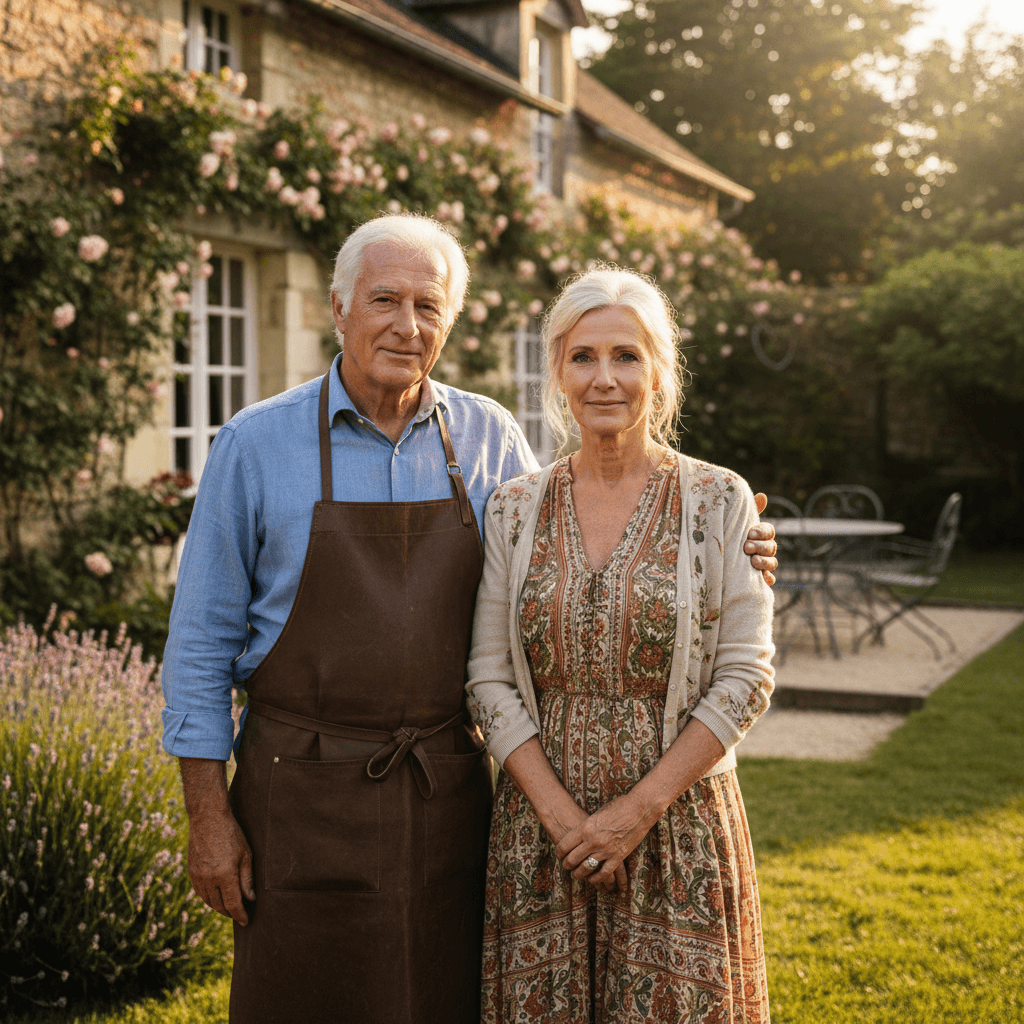
Jan & Marie
Groningen → Dordogne
From an upstairs flat in Groningen to a chambre d\
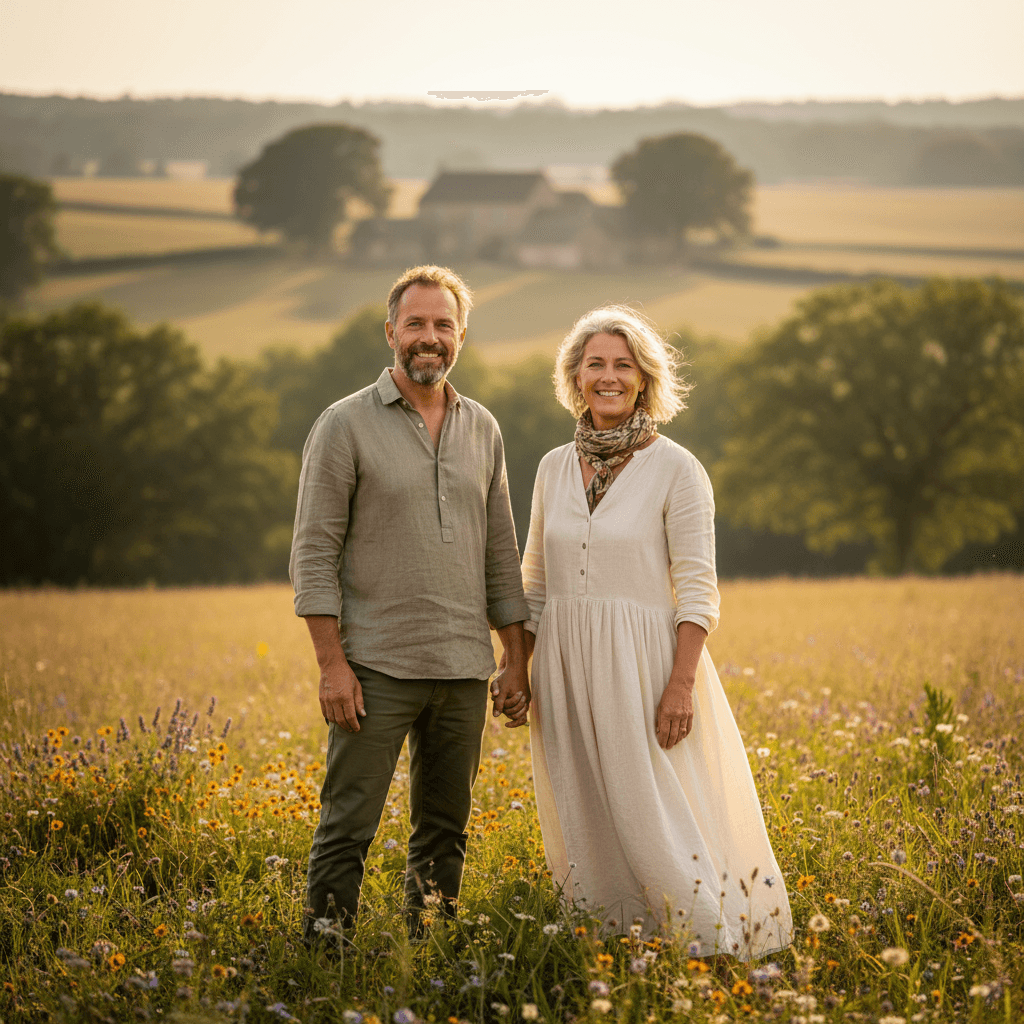
Henk & Wilma
Amersfoort → Dordogne
After 30 years in Amersfoort we traded our terraced house for a fermette in the Dordogne. The best decision of our lives.

Fleur
Amsterdam → Parijs
As an illustrator I dreamed of Paris. With a micro-entreprise and a studio in Belleville that dream became reality.